
Past Residents at a Pittsfield Address
Previous residents research needs an era check before a name search. The present assessor record is the starting point, not the finish. Deeds follow owners, directories may place occupants at a printed address, permits date work, and census or probate files add household context. Each source has its own coverage and gaps. A property history becomes more dependable when the next step is selected by the year in question instead of expecting every record to cover every generation.
| Address-history source | Years it covers | Where held | What it can show |
|---|---|---|---|
| Assessor and GIS | Current assessment; historical depth not stated | Pittsfield Assessors and city GIS | Current owner, MBL, situs and mailing fields, parcel characteristics |
| Public View permits | 1985-current, with some 1984 | Pittsfield Building Inspector | Applications, permits, images, and work chronology; archive incomplete |
| Modern deed index | Current and historical indexed results | Berkshire Middle Registry of Deeds | Transfer parties, type, date, book/page, legal description, image |
| Historical deed routes | 1761-1969 common-record route; 1641-1969 grantor/grantee modes | Berkshire Middle Registry of Deeds | Earlier book and index trail, with record-class limits |
| City directories | 1868-1975 selected years | Athenaeum, State Library, licensed collections | Printed address, household, occupation, spouse or widow notation, house guide |
| State and federal census | State 1855 and 1865; federal 1790-1950 | Archives, NARA, and library resources | Household and enumeration context; most 1890 schedules were destroyed |
| Probate and obituaries | Historic probate index 1761-1930; files 1761-1917; online estates from 2009 | Probate court, Archives, Athenaeum resources | Estate, heirs, death, notices, and address clues |
Start with the newest deed when the question concerns ownership. Start with a dated directory when the question is a particular household. Sanborn maps and permits help explain a building but do not name everyone who lived there. The table also shows why a clean chain sometimes stops: a directory may not have been published, a record may be unindexed, or a search may be using a later street form.
Freeze the Pittsfield Parcel First
Before looking for past residents, preserve the current MBL, situs address, owner name, mailing address, legal description, and the date of the search. The MBL is Pittsfield's map-block-lot identifier. It provides a durable parcel key when a building number changes or older papers name a lot rather than a road. The mailing address is only the destination for tax correspondence. It may identify an owner, trustee, business, or agent, and it does not establish who lived at the parcel.
Open the city property record and GIS map together. Confirm the parcel polygon, then retain any plan reference from the deed. If the property is registered land, use the Registry's certificate search rather than assuming a recorded-land chain. A current homestead or exemption field is assessment evidence only. It should not be used as conclusive proof of occupancy.
Note: Save the exact address wording from every record because an old number, abbreviated road, or former name can be the key to the next source.
Pittsfield Previous Residents in Deed Chains
The backward deed chain begins at the current parcel record and the latest purchase deed. In Berkshire Middle's Recorded Land Property Search, use the street or legal description to locate that deed. Record the document number, book/page, recording date, grantor, grantee, document type, legal description, plan reference, and image link. Then read the prior-deed recital, often expressed as the same premises language, to identify the earlier instrument.
- Use the assessor record to confirm the Pittsfield situs, MBL, current owner, and legal-description lead.
- Locate the latest deed in Berkshire Middle records and save the deed image plus its book/page or document number.
- Search the seller from that deed as a grantee. That search seeks the seller's earlier acquisition, not a guess based on a similar name.
- Repeat the transfer sequence, allowing for spouse, trust, business, and name-variant entries. Compare dates against plans and legal descriptions.
- Switch routes for Registered Land or older common records, and use the Registry counter or terminal when an old legal description does not retrieve online.
The Berkshire Middle Registry of Deeds is the official office-information source for Pittsfield land-record research.
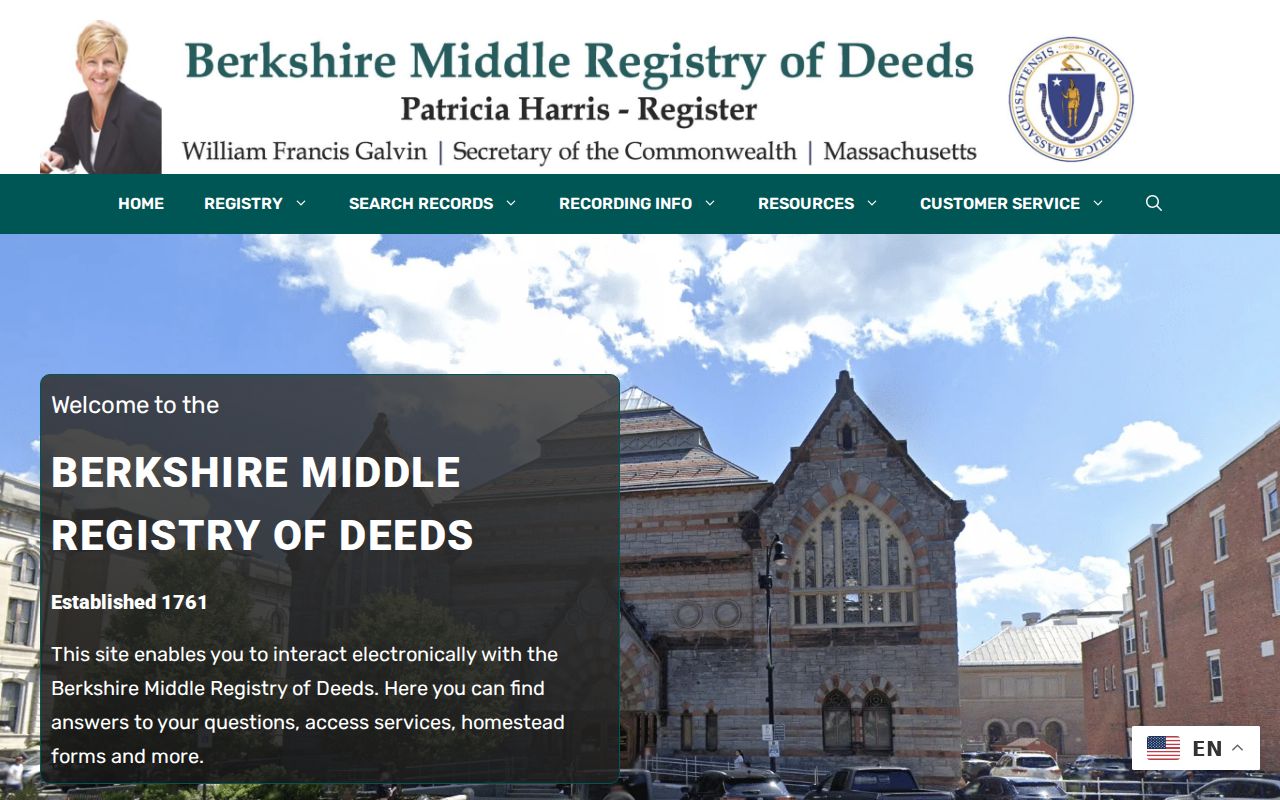
A deed sequence identifies transfer parties and parcel continuity. It does not by itself prove that an owner lived at the address during the full ownership period.
- Grantor and grantee
- The grantor transfers an interest in land. The grantee receives it. Reading the same person in both roles is how a deed chain moves backward.
- Chain of title
- The sequence of recorded transfers used to connect one owner or interest to an earlier one for the same parcel.
- Legal description
- The land description in a deed or plan. It can outlast a street-name or building-number change.
- MBL
- The map-block-lot parcel identifier used in Pittsfield assessor material and GIS, useful for tying an address to map and deed work.
Pittsfield Deeds Before Modern Indexing
The Registry's online interface has a specific historical split. It displays 1641-1969 Grantor Index and Grantee Index modes, but the Registry instructions direct common-record documents recorded from August 8, 1761 through June 27, 1969 to Unindexed Property. A failed modern property search does not mean an old deed is absent. Move to Unindexed Property, Book 1-1024, and the historical party indexes before ending the title trail.
Use the town setting carefully. Pittsfield belongs to the Berkshire Middle District, not the North or South district. If address text is not enough, narrow a registry query with town, date range, document type, book/page, plan, or legal description. The Registry states that searching, viewing, printing, and downloading are free at inspection, while certified or official-copy charges should be confirmed with the office.
That historic route is also an explanation for a records geography that can feel unusual. Berkshire County government was abolished in 2000, while Registry functions moved into a Commonwealth-administered system. For a question about a pre-index book, ask the Registry which counter or terminal holds the source rather than looking for a general county clerk.
Pittsfield Previous Residents in Directories
Ownership is only part of who lived here before. Pittsfield city directories, State Library voting lists, and census schedules offer dated household evidence. The State Library lists city-directory holdings beginning in 1868 and continuing through selected 1975 volumes. Its Pittsfield voting-list holdings include selected years from 1923 through 1959, plus 1978, 1980, and 1989. The 1855 and 1865 Massachusetts state schedules are arranged by street of visitation, which can be useful where a house guide is missing.
- Choose the directory edition nearest the deed or permit date, then record the exact page, address spelling, initials, occupation, and spouse or widow notation if printed.
- Search the house guide or reverse section when that edition provides one. It starts with the address instead of the surname.
- Move one edition forward and backward. Compare name variants, street abbreviations, and the directory's abbreviation key.
- Bracket the interval with the nearest released federal census or the 1855 and 1865 state schedules, then compare the household with deed ownership.
- Use an obituary or probate file only as a later trail lead, and keep the event date separate from the person's address history.
Directories are snapshots. A listed person may have moved before printing, and an omitted household may reflect coverage, spelling, or OCR rather than absence. The collection-level details belong in the Pittsfield Directory Book, while this address trail uses the editions to test one parcel at a time.
The digitized Massachusetts city-directory collection is one searchable route for place and year filtering where the relevant Pittsfield run is available.
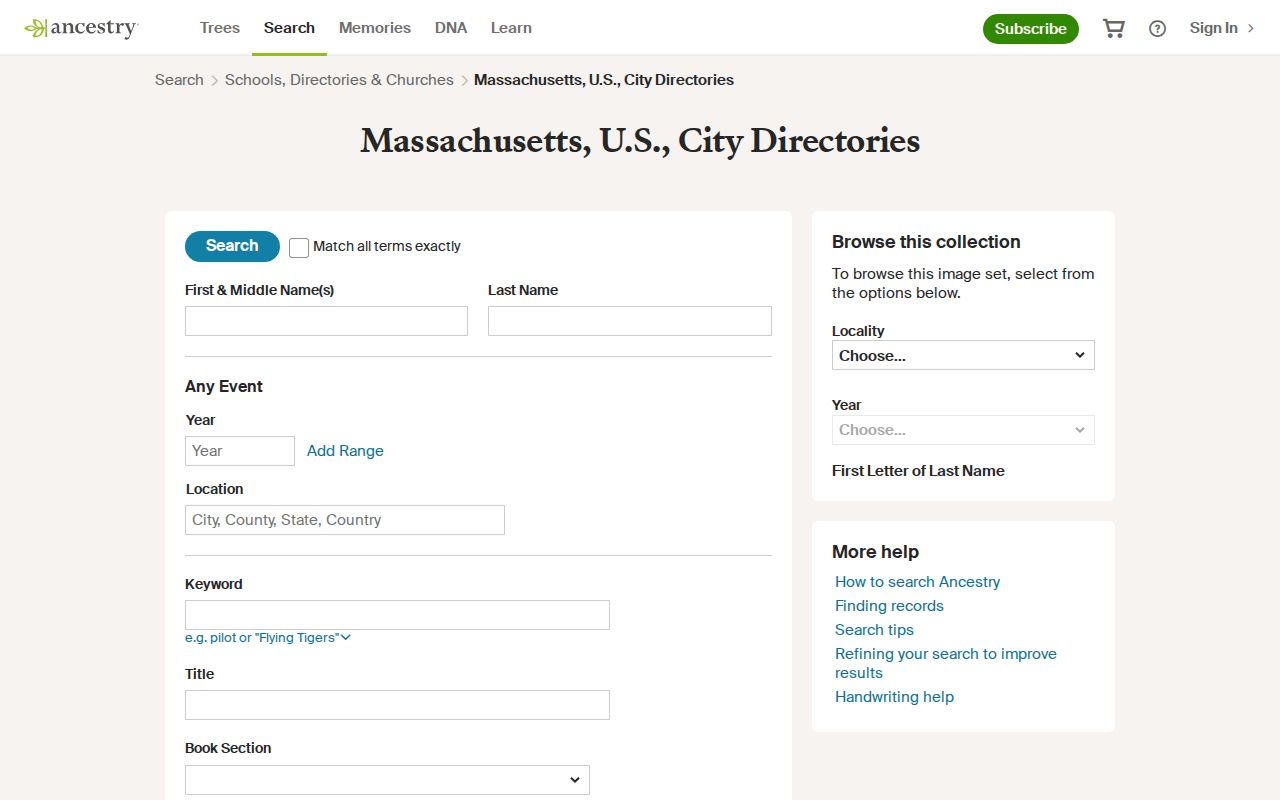
A scanned directory page needs its year and page preserved, so the entry can be compared with deeds, census schedules, and the next edition.
Pittsfield Sanborn Sheets and Past Addresses
The Library of Congress offers a 1956 Pittsfield Sanborn atlas with 97 public-domain sheets. Sanborn maps can help verify whether a building stood on the parcel, its footprint, material, use, outbuildings, and nearby lots. They are not an owner or resident index. The Athenaeum's digital resources also advertise library access to Sanborn Maps, though the public research did not establish the exact Pittsfield years available there.
Public View adds a later construction timeline. Its Pittsfield records run back to 1985 with some 1984 material, but the city says not all archived files are yet present. Search by number and street name or by parcel ID, omit suffixes, and use S, W, or E without periods. Compare a permit event with deed dates and map evidence. An applicant can be a contractor or other party, so it should not be treated as a resident finding.
Pittsfield Public View is the official portal family represented by the available permit-search capture.
Permit dates can narrow the period for a change to a Pittsfield property, then guide the directory and newspaper search around that interval.
Pittsfield Address Changes at Mount Road
Do not assume an older record failed simply because the modern address does not match its text. Pittsfield assigns building numbers through the Commissioner of Public Services and Utilities, and Public Works keeps an index with street laying-out, acceptance, and alteration information. A legal description, MBL, and recorded plan can bridge a changed address more reliably than a typed street search alone.
One local historical source records an E911 reorganization that renamed a route Mount Road in 2007. Retain the old form and the current name in research notes, then search both. Honorary designations do not replace official street names or require readdressing.
The Pittsfield Street Views record supplies the local Mount Road renaming context.
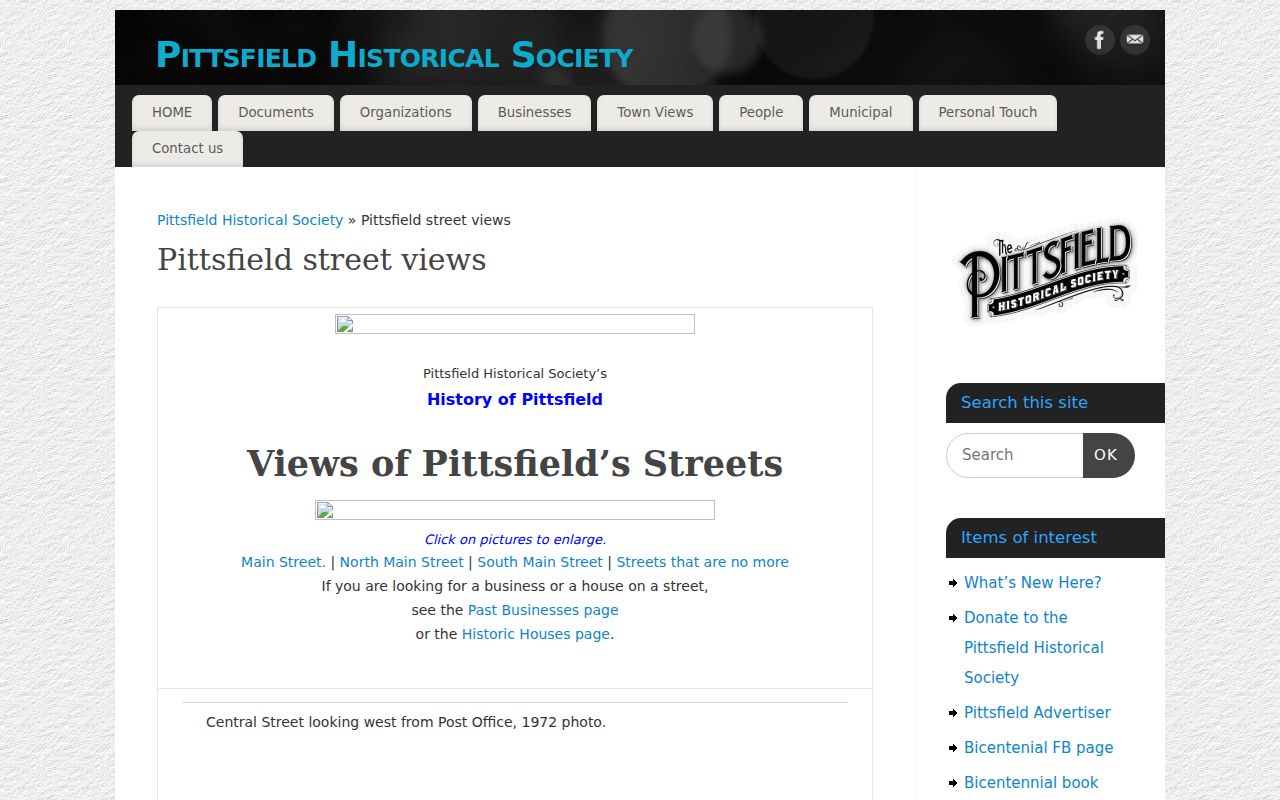
Matching both address forms to the same parcel and legal description helps prevent a gap in a Pittsfield previous-residents trail.
Pittsfield History at the Athenaeum
The Berkshire Athenaeum Local History and Genealogy Department is the practical support route when an address trail reaches printed or archival material. It holds historic city directories and atlases, local yearbooks, BFHA indexes, newspapers, digital collections, maps, manuscripts, and local research assistance. It also holds 71,000 NARA microfilm reels that include census, naturalization, and military materials. Those reels are stored in a non-public area and must be requested.
Six microfilm machines can print, save to a flash drive, or email scans. The library warns that microfilm cannot be retrieved nights or weekends. For a parcel-specific source plan, the Local History Department offers Thursday genealogy assistance; its verified contact route is localhistory@pittsfieldlibrary.org, extension 204. This is especially useful for family research when a deed identifies an owner but directories or newspapers are needed to locate a household in time.
The Berkshire Athenaeum microfilm information describes its request-only storage and scan options.
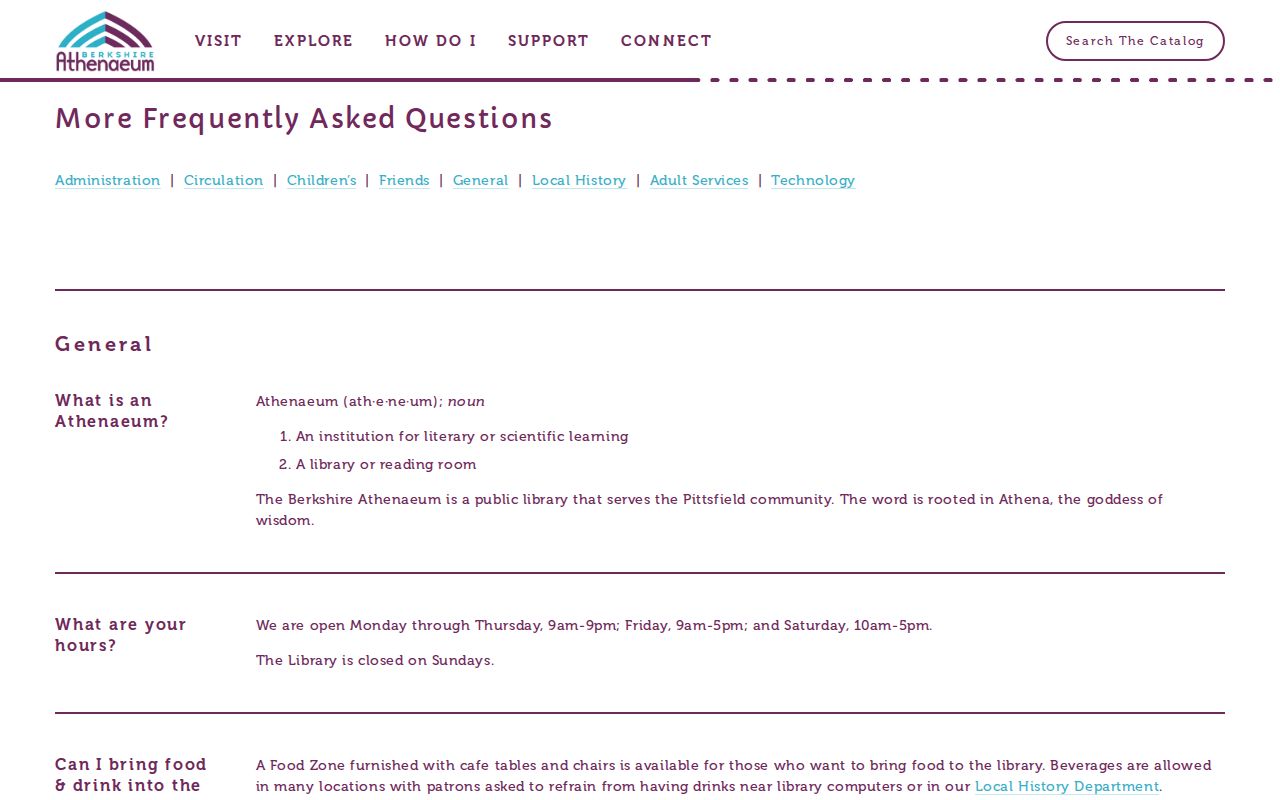
The Athenaeum's collections supply the household and local-history evidence that a deed index alone cannot provide.
Pittsfield Probate and Address Endpoints
When a former owner or household member disappears from directories, an obituary, death notice, or probate file can provide an endpoint for further family-history work. Berkshire probate has a historic index for 1761-1930, books and file papers for 1761-1917, and online estate searching from 2009. Probate records can identify an estate, personal representative, heirs, and clues in the papers, but impounded matters remain unavailable to ordinary public access.
Use a death or estate date to choose later directories or identify a transfer, then verify the land change through the Registry. The remote court portal is not the official case file, and older material may require the Probate Court, public terminal, or Archives route. A probate appearance is not a complete account of a family's later address history.
The Massachusetts historic probate guidance lists the Berkshire index, file-paper coverage, and archive fallback.
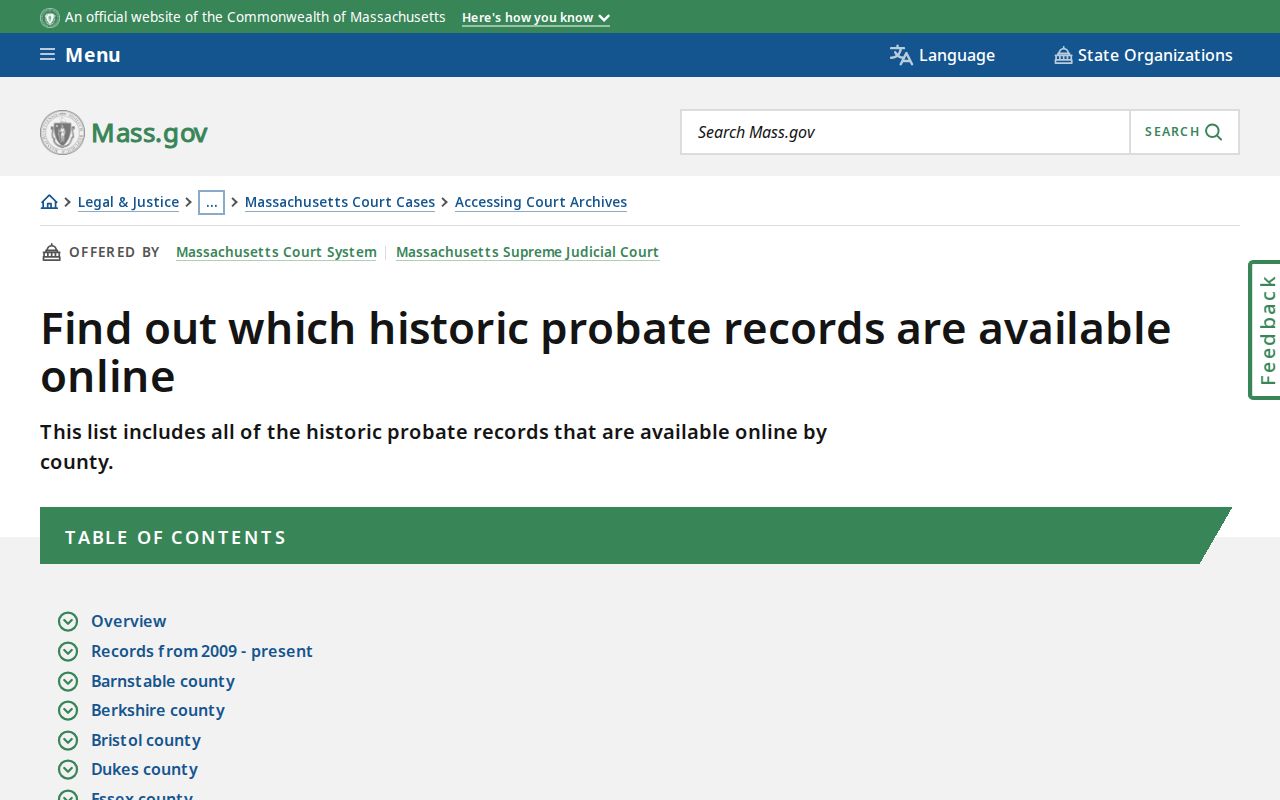
Probate can close one branch of an address history and lead to an heir or later transfer, subject to the record's public-access limits.
Lawful use. Research on past Pittsfield households is appropriate for house history, family history, and personal curiosity. Do not use record details to stalk, harass, or harm any living person.